

Quick Answer: Most seniors recover well at home after bypass surgery when a caregiver is available, the house is safe, and home health visits are arranged before discharge. A skilled nursing facility is the better choice when a senior cannot walk safely, lives alone, or needs daily nursing care. Your surgeon and the hospital discharge team should confirm the right fit.
Within days of heart surgery, the hospital discharge planner asks a big question: where is your parent going next? For seniors, the choice between bypass surgery recovery at home or in a skilled nursing facility shapes healing, safety, and cost for the next two to three months.
Both options work. They work for different people. This guide explains what recovery involves, who does better where, what Medicare pays, and how to decide before the discharge paperwork arrives.
What Does Bypass Surgery Recovery Look Like for Seniors?
Most seniors spend about a week in the hospital after bypass surgery, then need roughly 6 to 12 weeks to recover fully. The early weeks focus on protecting the breastbone, managing fatigue, and walking a little more each day.
The breastbone takes about six to eight weeks to heal. During that time, patients are told not to push, pull, or lift anything heavier than 5 to 10 pounds. That rules out vacuuming, heavy doors, and grocery bags, and it makes standing up from a low chair harder than it sounds.
Cardiac rehabilitation usually starts 2 to 6 weeks after discharge and often runs about three months. It combines supervised exercise, education, and emotional support.
Age matters here. A University of Michigan study of Medicare patients found that half of those aged 80 and older used a skilled care facility after bypass surgery, and older patients stayed longer. That data is from the late 1990s, but older patients still tend to need more help.
When Should a Senior Recover in a Skilled Nursing Facility?

A skilled nursing facility is the better choice when a senior needs daily nursing care, cannot move around safely, or has no one at home to help. These facilities provide round-the-clock nurses, physical and occupational therapy, and medication management in one place. You can browse skilled nursing facilities on Geezer Guide to compare options early.
Signs a Skilled Nursing Facility Fits
- Your parent lives alone and no caregiver can stay for the first few weeks
- Walking or rising from a chair still needs hands-on help
- Diabetes, kidney disease, or wound care calls for close monitoring
- The bedroom is upstairs or the bathroom is hard to use
- Memory problems make discharge instructions hard to follow
A Real-World Example
Picture a 78-year-old widower with diabetes who lives in a two-story house. After six days in the hospital, he can walk only 20 feet with a walker. His daughter works full time two hours away.
A short facility stay gives him daily therapy and nursing care while the family prepares the house.
The downside is real. Facility life can feel institutional, sleep gets interrupted, and exposure to other residents' illnesses is a risk. Ask every facility about infection control and its experience with cardiac patients.
When Is Recovering at Home the Better Choice?
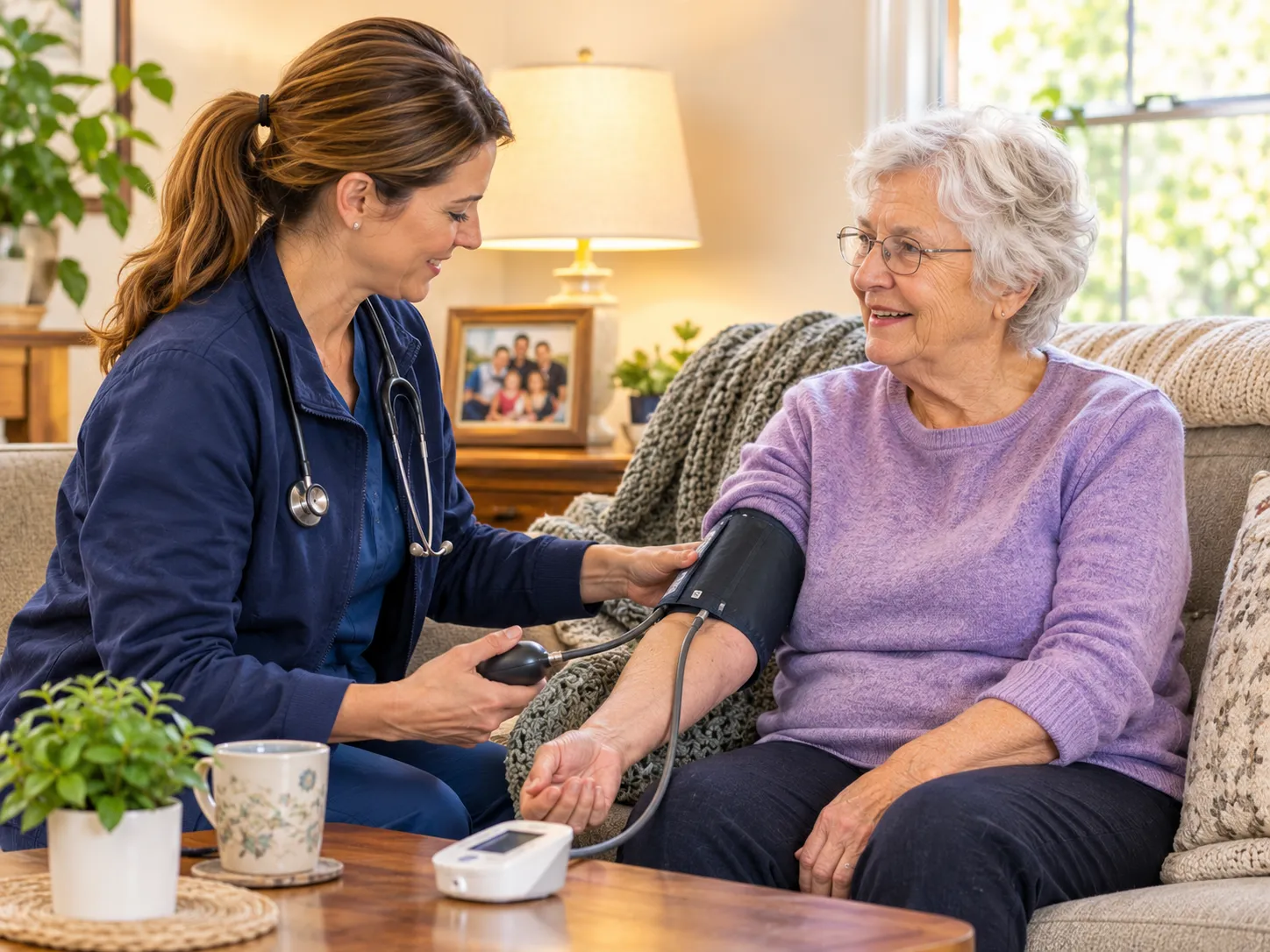
Home recovery works best for seniors who can walk safely, take medications reliably, and have a family member or paid caregiver nearby. Most cardiac surgery patients do go home, and home often means better sleep, familiar meals, and less stress.
Support matters as much as location. A 2017 cardiovascular review cited one study with 30-day readmission of 3.9 percent for bypass patients visited at home by a cardiac surgery nurse practitioner, compared with 11.5 percent for patients with no home visits.
What a Safe Home Setup Requires
- A caregiver present for at least the first one to two weeks
- A bedroom and bathroom on the main floor, or a plan for stairs
- A pill organizer and a written medication list
- Home health nurse and therapist visits scheduled before discharge
- Rides to follow-up visits and cardiac rehab
The trade-off is that home recovery puts real work on family. Someone must cook heart-healthy meals, help with bathing, and watch for fever, wound redness or drainage, swelling, or shortness of breath. If no one can do that, home is not the right call, however much your parent wants it.
How Do Home Recovery and a Skilled Nursing Facility Compare?
This table compares nursing hours, caregiver burden, and cost.
| Factor | Home With Home Health | Skilled Nursing Facility |
|---|---|---|
| Nursing care | Part-time visits | Available 24 hours a day |
| Therapy | Therapist visits at home | On-site, with daily skilled care required |
| Family caregiver | Needed, often full time at first | Not required |
| Medicare cost in 2026 | $0 for covered home health | $0 for days 1 to 20, then $217 a day |
| Main risks | Falls, missed pills, caregiver burnout | Infection exposure, lost routine, cost after day 20 |
What Does Medicare Cover After Bypass Surgery?
Original Medicare covers both options, but the rules differ. Skilled nursing facility coverage requires a qualifying hospital stay, while home health requires that your parent be homebound.
For a facility, Medicare requires at least three consecutive days as a hospital inpatient, and admission must follow within 30 days. Observation status does not count, so ask the hospital whether your parent is formally admitted.
In 2026, Medicare pays the full cost of days 1 to 20. You pay $217 per day for days 21 to 100, and Part A stops paying after day 100. Medicare does not cover long-term custodial care.
Home health works differently. Medicare covers part-time skilled nursing, therapy, and sometimes an aide when a doctor certifies your parent as homebound. You pay $0 for covered services and 20 percent for equipment such as a walker. Homebound does not mean never leaving home, since medical trips are allowed.
Medicare Advantage and Medigap plans change these details, and amounts update each January. Call your plan before deciding, and understand your care options in case longer-term care becomes necessary.
How Do You Decide Between Home and a Skilled Nursing Facility?
These six steps keep the decision practical.
- Get the plan in writing. Ask the surgeon and discharge planner for activity limits and therapy needs.
- Test mobility honestly. Can your parent stand, walk to the bathroom, and manage needed stairs with little help?
- Count the helpers. List who can be there day and night for the first two weeks.
- Confirm Medicare status. Check inpatient days and ask about coverage before discharge.
- Tour early. Ask each facility about cardiac recovery experience, staffing, and infection control.
- Plan the step down. Arrange home health and cardiac rehab for the return home. If home will not be safe afterward, assisted living facilities can provide meals and daily help.
How Does Surgery Affect Mood and Memory?
Bypass surgery can affect mood and thinking as well as the heart. Many patients feel low, anxious, or foggy in the first weeks, and depression and anxiety are common after the operation.
Home offers familiar routines and family. A facility offers structure and social contact. Either way, tell the care team about lasting sadness, poor sleep, or confusion instead of waiting it out. Daily walking, good food, and time with people support the heart and the mind together.
Frequently Asked Questions
How long does bypass surgery recovery take for seniors?
Most seniors need 6 to 12 weeks, and some take longer. Driving usually resumes around week 4 to 6 once the surgeon clears it.
Does Medicare pay for a skilled nursing facility after bypass surgery?
Yes, if your parent had a three-day inpatient hospital stay and needs daily skilled care. Medicare covers days 1 to 20 in full and charges $217 per day for days 21 to 100 in 2026.
Can a senior recover alone at home after bypass surgery?
Rarely in the first weeks. Lifting limits, fatigue, and medication changes make a helper important, so arrange a caregiver or a facility stay.
When should you call the doctor after bypass surgery?
Call the surgeon for fever, wound redness or drainage, leg swelling, or new shortness of breath. Call 911 for chest pain, fainting, or severe trouble breathing.
Final Thoughts on Choosing Where to Recover
The best place to recover is the one where your parent can heal safely with the support they actually have. Choose home when walking is safe and a caregiver is available. Choose a skilled nursing facility when daily nursing and therapy are needed, and confirm Medicare rules before discharge.
Not sure what your parent needs? Explore Geezer Guide's senior care resources to compare care types.