

Assisted living works for seniors in early-stage dementia who are still oriented and mostly independent. Memory care is built for seniors whose dementia has progressed to the point of wandering, unsafe judgment, or needing constant supervision. The right choice depends on your loved one's stage of dementia, not their age or diagnosis alone.
A dementia diagnosis does not come with an instruction manual. One family sees their mother forget a name here and there and assumes assisted living is fine. Another watches their father wander out the front door at 2 a.m. and knows something has to change now.
Memory care and assisted living both support seniors who need help with daily life. But they are not interchangeable, and choosing the wrong one can put your loved one at real risk. This guide breaks down what separates them, what each one actually costs, and how to know which fits your family's situation.
What Is the Difference Between Memory Care and Assisted Living?

Assisted living helps seniors with daily tasks like bathing, dressing, and medication reminders while they keep a large degree of independence. Memory care adds secured environments, dementia-trained staff, and structured routines built specifically around cognitive decline. The core difference is not the level of help. It's the level of supervision and safety design.
Assisted living communities are set up for residents who come and go, choose their own schedule, and manage most of their day with light support. Staff help with the basics, but they are not trained to manage the behavioral side of dementia: sundowning, repetitive questions, or aggression brought on by confusion.
Memory care communities are built differently from the ground up. Secured entrances and alarmed exits prevent wandering, a real and dangerous risk once dementia progresses. Layouts are simplified to reduce disorientation. Staff carry specialized dementia training and are typically present in higher ratios than in standard assisted living.
Explore the full breakdown on our Care Types Explained page if you're still sorting out which category fits your situation.
Staffing and Training Differences
Assisted living staff help residents with daily tasks, but most are not required to complete dementia-specific training. Memory care staff, by contrast, are trained in redirection techniques, validation therapy, and de-escalation methods built for cognitive impairment.
That training gap matters more as dementia advances. A caregiver who doesn't understand why a resident with dementia is agitated may respond in a way that makes things worse. A dementia-trained caregiver knows how to calm the moment instead of escalating it.
What Are the Signs Your Loved One Needs Memory Care Instead of Assisted Living?
The clearest signs it's time for memory care are safety-related: wandering, getting lost in familiar places, or unsafe judgment around things like the stove or medication. A single symptom rarely means it's time to move. A pattern of escalating incidents usually does.
Common signs families report before making the switch include:
- Wandering or attempting to leave the building unsupervised
- Getting lost in places they've known for years
- Missing or doubling up on medications despite reminders
- Increased falls or unsteady movement
- Late-day confusion or agitation, often called sundowning
- Needing frequent redirection to complete basic tasks
- Aggression or paranoia that wasn't present before
For example, if your mother has early-stage Alzheimer's but still recognizes her apartment, manages her own hygiene with reminders, and enjoys the same social activities she always has, standard assisted living may still be the right fit. If she's begun trying doors at night or can no longer find her way back from the dining room, that's a different situation entirely.
If you're noticing these changes, start by browsing memory care communities near you to see what dementia-specific support actually looks like in practice.
Memory Care vs. Assisted Living: Side-by-Side Comparison
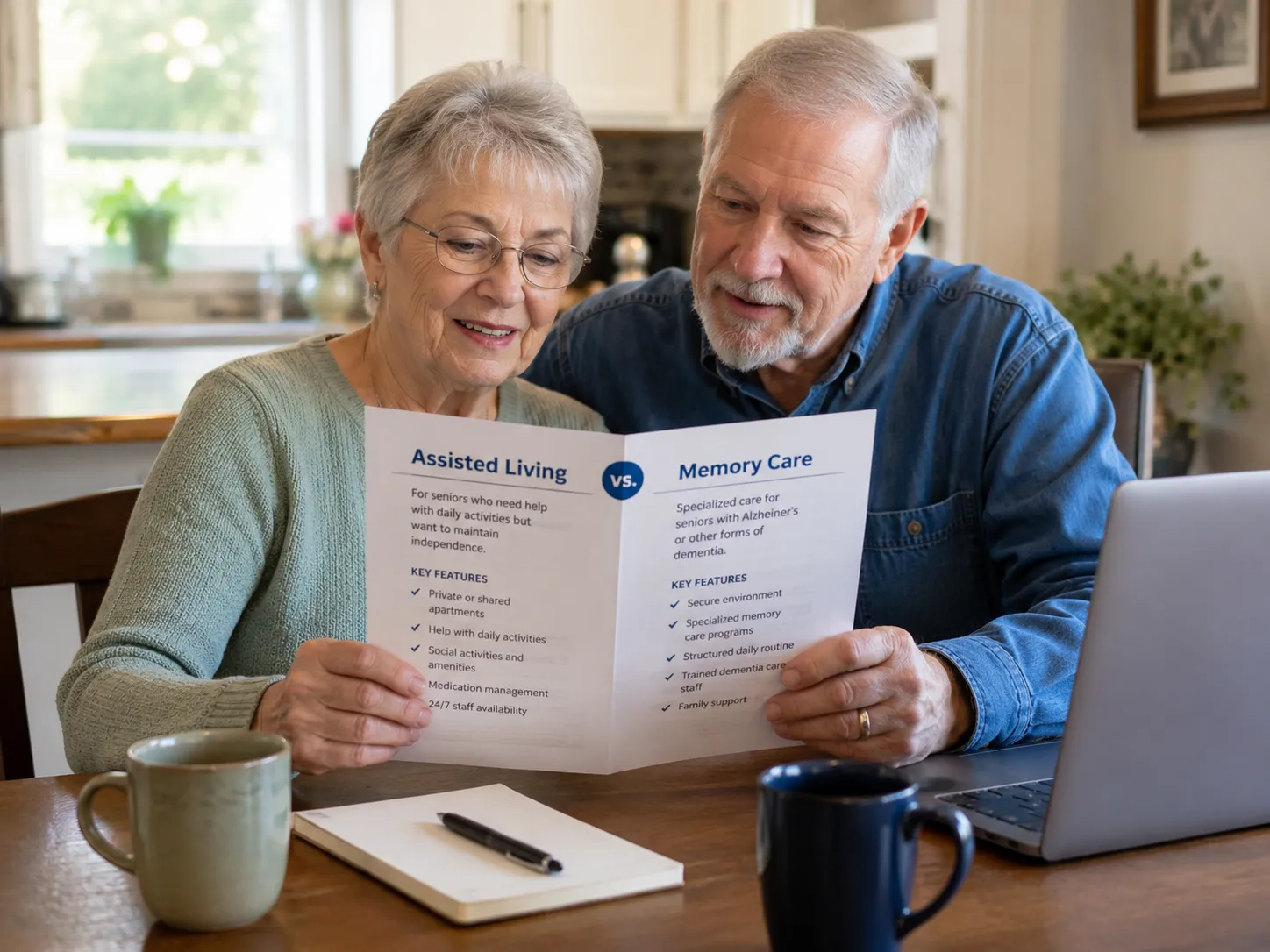
| Feature | Assisted Living | Memory Care |
|---|---|---|
| Best for | Mild memory changes, mostly independent | Moderate to advanced dementia |
| Staff training | General caregiving | Dementia-specific training |
| Security | Standard entry, residents come and go | Secured, alarmed exits |
| Staffing ratio | Lower | Higher |
| Environment | Larger, less structured | Simplified, low-stimulation layout |
| Programming | General social activities | Dementia-specific therapeutic activities |
| Typical monthly cost | Lower | Roughly 30 to 40 percent higher |
How Much Does Memory Care Cost Compared to Assisted Living?
Memory care typically costs 30 to 40 percent more than standard assisted living because of higher staffing ratios and specialized training. National data from the Genworth/CareScout Cost of Care Survey puts the median annual cost of assisted living at roughly $74,400, with memory care running higher still and varying widely by region.
The honest limitation here is that cost alone shouldn't drive the decision. A cheaper assisted living placement that can't actually keep your loved one safe isn't cheaper in the long run. It just delays a harder, more expensive transition later, often after a fall or a wandering incident forces the issue.
Ask any community you tour for a detailed breakdown of base rent versus care-level add-ons. Some assisted living communities charge extra for dementia-related support in a way that closes most of the cost gap with dedicated memory care.
Can Someone With Dementia Start in Assisted Living and Move Later?
Yes. Many seniors in early-stage dementia live comfortably in assisted living for months or years before their needs change. The key is choosing a community that monitors cognitive changes closely and is honest with your family about when a transition is needed.
Ask upfront how the community assesses cognitive decline, how often reassessments happen, and what triggers a conversation about moving to memory care. Communities that offer both levels of care under one roof, sometimes through a continuum-of-care model, can make that eventual transition less disruptive.
The Mind and Body Connection in Dementia Care

Dementia care isn't only about managing cognitive symptoms. Physical health and mental engagement are closely linked, and the strongest memory care programs treat them together. Staying physically active, even with light mobility work, has been associated with slower functional decline in seniors with dementia.
Look for communities that build movement, nutrition, and mental engagement into daily programming rather than treating them as separate add-ons. A senior who stays physically strong and mentally engaged, even with a dementia diagnosis, tends to maintain a better quality of life longer.
Frequently Asked Questions
Is memory care the same as a nursing home?
No. Memory care focuses on dementia-specific supervision and daily living support, while nursing homes provide skilled medical and rehabilitative care. Some seniors with advanced dementia and significant medical needs may require skilled nursing instead of memory care.
Will Medicare or insurance cover memory care costs?
Medicare generally does not cover the room and board costs of memory care or assisted living. Long-term care insurance, veterans benefits, or private pay typically cover these costs, so it's worth reviewing your loved one's coverage early in the process.
What is the difference between Type A and Type B assisted living?
Type A facilities serve residents who can respond appropriately in an emergency without physical assistance. Type B facilities are licensed for residents who need more help, including some with mild cognitive impairment. Learn more on our Type A vs. Type B Assisted Living guide.
How do I bring up memory care with a parent who refuses to move?
Focus the conversation on specific safety incidents rather than the diagnosis itself, and involve their doctor if possible. Many families find it easier when a trusted physician, not just family members, explains why the move matters.
What questions should I ask when touring a memory care community?
Ask about staff-to-resident ratios, dementia-specific training requirements, how the community handles behavioral changes, and what a typical day looks like. Ask what happens if your loved one's needs increase further down the road.
Making the Right Call for Your Family
Assisted living and memory care both have a real place in dementia care. The right one depends on where your loved one is today, not where they were a year ago or where you hope they'll stay. Watch for safety-related changes, ask direct questions on every tour, and don't wait for a crisis to force the decision.
If you're weighing your options, start by comparing verified assisted living and memory care communities side by side. You can also browse our full senior care resources for more guidance on making this decision with confidence.