

Quick Answer: Nursing home care is the right fit when a senior with severe mobility problems needs hands-on help with transfers, repositioning, bathing, and toileting around the clock. Skilled nursing facilities provide nurses on every shift, therapy, and trained lift teams. Medicare covers only short, medically necessary stays, so most long term costs come from other sources.
If your mother cannot stand without help, or your father needs two people to move from bed to chair, daily life gets risky fast. Falls, pressure sores, and caregiver burnout often follow.
Nursing home care for seniors with severe mobility problems exists for this situation. It combines round the clock nursing, therapy, and safe equipment under one roof.
This guide explains when a nursing home makes sense, what good mobility care looks like, what it costs, and how to compare facilities. It speaks to seniors planning their own care and to adult children deciding for a parent.
When Is Nursing Home Care Necessary for Severe Mobility Problems?

Nursing home care becomes necessary when a senior needs physical help with most movement and that help cannot be delivered safely at home or in a lower level setting. The clearest signs are transfers that need two people or a mechanical lift, repeated falls, and skin breakdown from limited movement.
Other signs include:
- Your loved one cannot reposition in bed without help
- Bathing and toileting require lifting or full support
- Medical needs such as wound care, catheters, or tube feeding sit on top of mobility limits
- The family caregiver is injured, exhausted, or unable to help overnight
For example, say your father had a stroke and has weakness on his left side. He weighs 210 pounds and needs a lift to get out of bed. His wife is 74 and has back pain. Even with home health visits, the nights are unsafe for both of them. A nursing home gives him trained staff on every shift and gives her real rest.
If you are still sorting out which level of care fits, understand your care options before you tour anywhere.
Mobility problems also affect the mind. Isolation and inactivity speed up decline, which is why Geezer Guide treats physical and cognitive health as a pair. Look for a nursing home that keeps residents engaged, not just safely parked.
What Mobility Care Should a Nursing Home Provide?
A good nursing home provides assisted transfers, scheduled repositioning, therapy, fall prevention, and pressure injury care. These services should be written into a care plan that staff review with you regularly.
Safe Transfers and Equipment
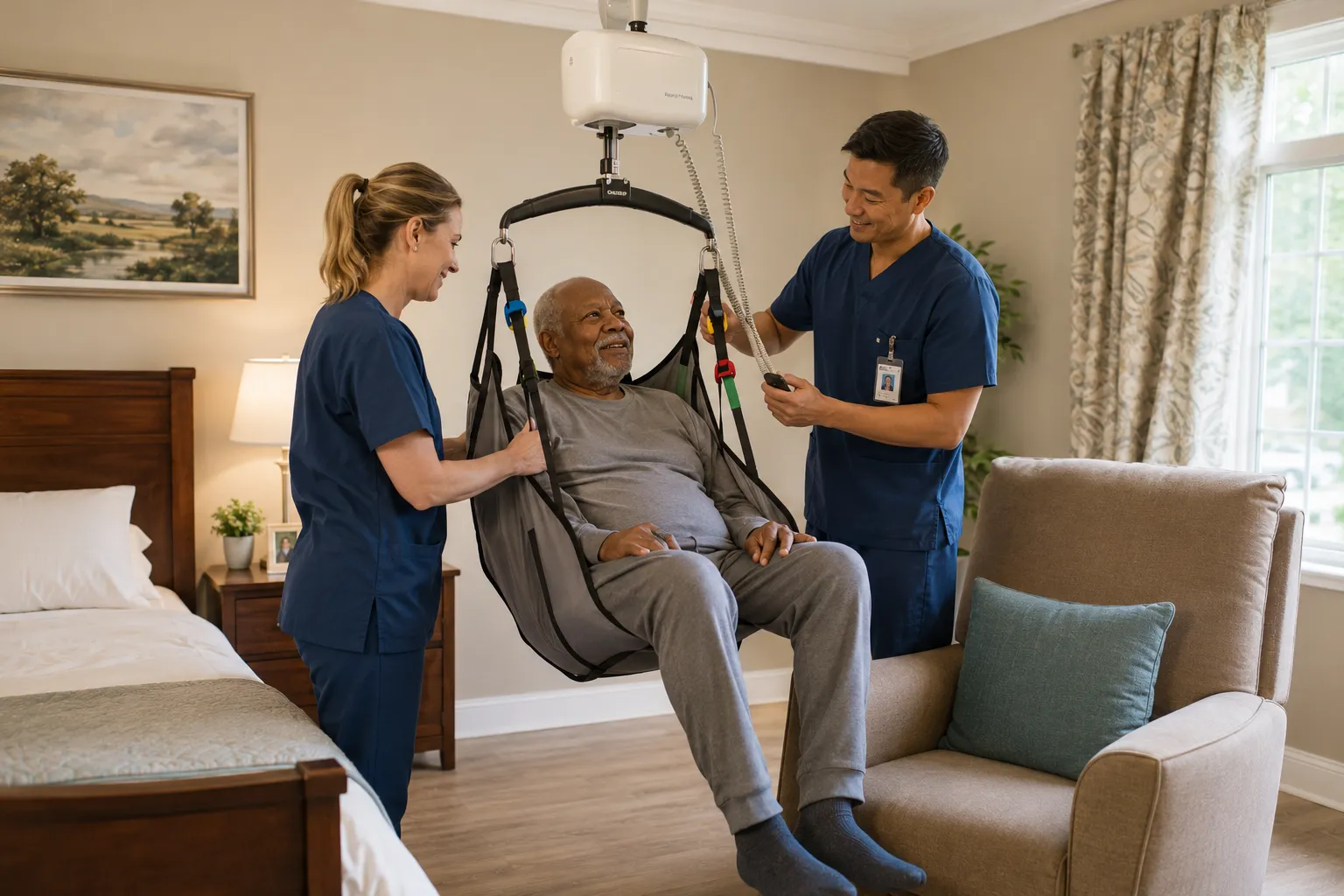
Ask whether the facility uses mechanical lifts, gait belts, and slide sheets, and whether staff are trained on them. Proper equipment protects residents from drops and protects aides from injury.
Therapy and Movement

Physical and occupational therapy help residents keep the strength they have. Even small gains, such as sitting upright for meals or standing for 30 seconds, can improve breathing, digestion, and mood. Ask how often therapy happens and who pays for it after a Medicare covered stay ends.
Skin Care and Pressure Injury Prevention
Residents who cannot shift their weight are at high risk for pressure injuries. Staff should turn residents on a schedule, use pressure relieving mattresses, and check skin daily. Ask how many pressure injuries the facility has had in the past year.
How Does Nursing Home Care Compare to Assisted Living for Limited Mobility?
Assisted living works for seniors who need help with some daily tasks but can mostly move with a walker or one person assisting. Nursing home care fits seniors who need extensive physical help and regular nursing oversight. The gap matters most when a resident needs lift based transfers or daily nursing tasks.
| Feature | Assisted Living | Nursing Home |
|---|---|---|
| Nurse staffing | Limited, varies by facility | Licensed nurses on site around the clock |
| Transfers | Usually one person assists | Two person or mechanical lift transfers |
| Therapy | Often arranged through outside providers | Often provided on site |
| Medical oversight | Basic health monitoring | Daily nursing care and physician oversight |
| Typical resident | Needs help with some daily tasks | Needs extensive help or medical care |
| Medicare coverage | Generally not covered | Short skilled stays may be covered |
In Texas, assisted living facilities are licensed as Type A or Type B. Type A residents must be able to evacuate on their own, while Type B facilities can serve residents who need staff help to leave in an emergency. Read about Type A vs Type B assisted living to see how this affects someone with mobility limits.
The trade-off is real. Assisted living costs less and feels more like home, but a resident who needs lift transfers or ongoing nursing care often outgrows it. Starting in a nursing home avoids a second move later, though the monthly cost is higher. You can still browse assisted living facilities to compare.
How Much Does Nursing Home Care Cost, and Who Pays?
Nursing home care is one of the most expensive forms of senior care, and Medicare pays for only a small part of it. According to Medicare.gov, Part A may cover a stay in a certified skilled nursing facility when skilled care is medically necessary, but it does not cover custodial care when that is the only care you need.
Most long term nursing home care is custodial, meaning help with bathing, dressing, toileting, and eating. Medicare coverage for a skilled stay is also limited to 100 days per benefit period. Medicare Advantage plans may work differently, so call your plan before admission.
Families usually pay through a mix of these sources:
- Medicare for short, medically necessary skilled stays
- Medicaid for long term care, if your loved one qualifies
- Long term care insurance, if a policy exists
- PACE, a program that helps some qualifying seniors with nursing home level needs
- Private pay from savings or the sale of a home
Costs vary by region and room type, so ask each facility for a written rate sheet. Ask what is included, such as incontinence supplies, therapy, and transportation.
How Do You Choose the Right Nursing Home for Someone With Limited Mobility?
Visit in person, ask direct questions about staffing and mobility care, and compare at least three facilities. Tour at different times of day, including a mealtime and an evening.
Questions to Ask on a Tour
- How many residents does each aide care for on day and night shifts?
- Are there enough lifts for every hall, and how are staff trained to use them?
- How often are residents repositioned, and how is it recorded?
- Who provides therapy, and how many sessions happen each week?
- What activities can a resident join from a wheelchair or bed?
- How are families included in care plan meetings?
What to Notice While You Walk Through
Watch how fast staff answer call lights. Notice whether residents are clean and dressed. Pay attention to how aides speak to residents.
When you are ready to compare, search skilled nursing facilities and shortlist a few to visit.
When a Nursing Home Is Not the Best Fit
Severe mobility problems alone do not always require a nursing home. If medical needs are low, home care with a hospital bed, a lift, and a hired aide may work better. Staffing shortages are also a reality in many facilities, so a good one will tell you plainly how it covers every shift.
Frequently Asked Questions
When should a senior with mobility problems move to a nursing home?
Consider a move when transfers need two people or a lift, falls keep happening, or the caregiver can no longer keep your loved one safe. A doctor or social worker can assess the level of care needed.
Does Medicare pay for a nursing home if a senior cannot walk?
Not for mobility alone. Medicare may cover a skilled nursing facility stay only when skilled care is medically necessary, usually after a hospital stay. It does not pay for long term custodial care.
What is the difference between a nursing home and a skilled nursing facility?
A skilled nursing facility usually provides short term recovery care supervised by nurses and doctors. A nursing home is typically a long term residence. Many buildings offer both, so ask which beds are Medicare certified.
Can a senior with severe mobility problems live in assisted living?
Sometimes, if one caregiver can safely assist with transfers and no daily nursing is needed. Facilities set their own limits, so ask what happens if needs increase.
Choosing Care That Keeps Your Loved One Safe and Engaged
Three points matter most. Severe mobility loss needs trained staff and proper equipment. Medicare covers little long term care, so plan payment early. And a good facility supports body and mind, not just safety.
Ready to compare options near you? Browse verified skilled nursing listings on Geezer Guide or visit our senior care resources for checklists and guides.