
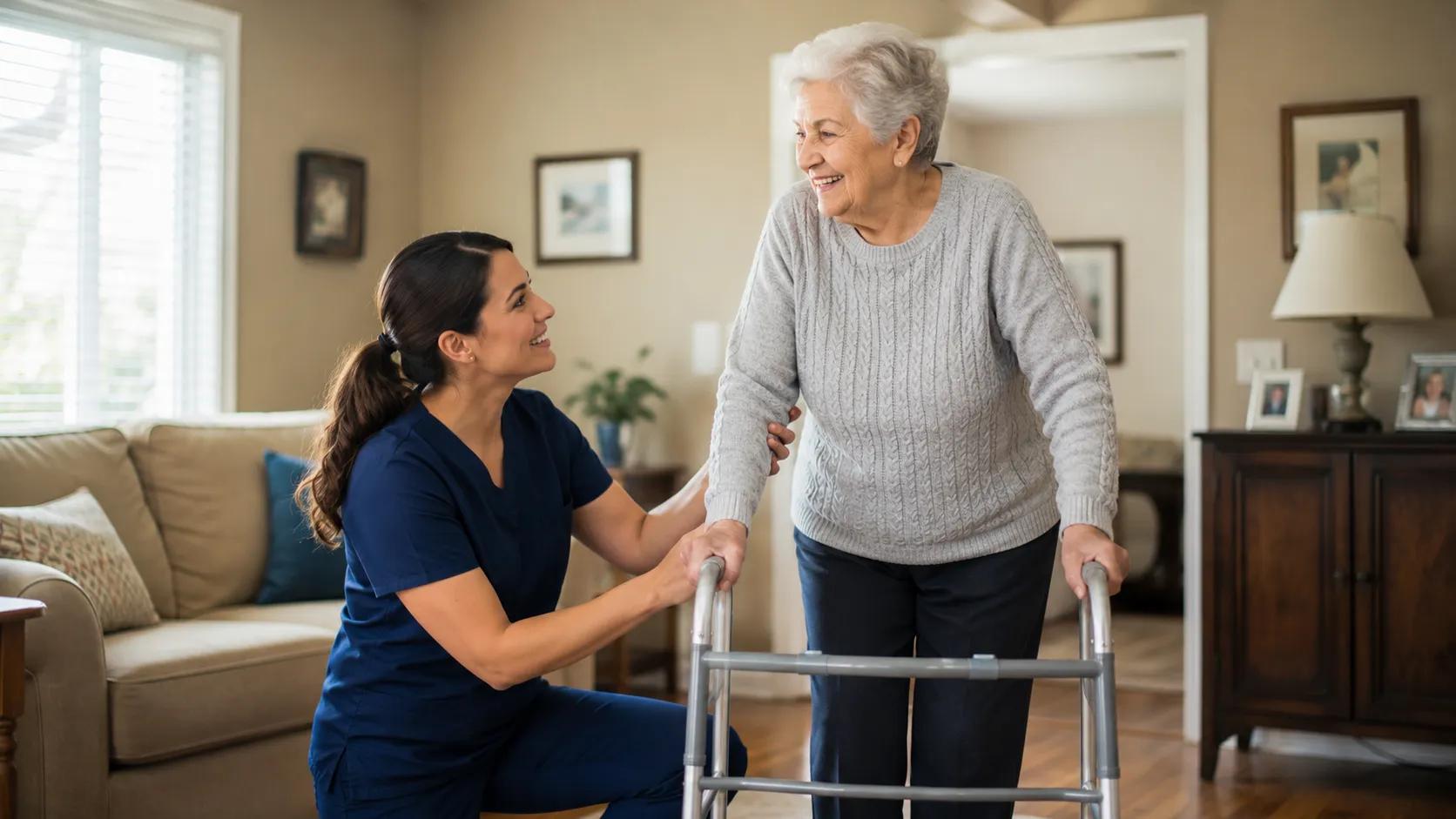
Quick Answer: Physical therapy for seniors after surgery rebuilds strength, balance, and joint movement through safe, step-by-step exercise. Starting within a day or two of surgery lowers the risk of weakness and complications, and it is one of the most dependable ways to get back to walking, bathing, and living at home.
Surgery fixes the problem. Physical therapy repairs what surgery leaves behind. After a hip replacement, knee replacement, fracture repair, or abdominal operation, the body is sore, stiff, and weaker than it was a week earlier. For an older adult, that weakness can be the difference between going home and needing long-term help.
Whether you are the one recovering or the adult child watching a parent heal, you probably want a plain explanation of what therapy involves. This guide covers what therapists do, when to start, how long recovery takes, what Medicare pays for, and how to choose the right setting.
Why Does Physical Therapy Matter So Much After Surgery?
Physical therapy matters because older bodies lose muscle quickly when they stay still, and surgery forces a lot of rest. Therapy interrupts that loss and teaches the body to move safely again.
One study of older adults recovering from emergency abdominal surgery found they spent more than 80 percent of their recovery time in bed. Muscle loss followed fast. Healing also takes longer after 65, and conditions such as diabetes, high blood pressure, and frailty can slow it further.
A physical therapist does more than hand out exercises. They watch how you stand up, shift your weight, and take your first steps. Then they adjust the plan to your surgery, your health history, and your goals.
When Should Physical Therapy Start After Surgery?
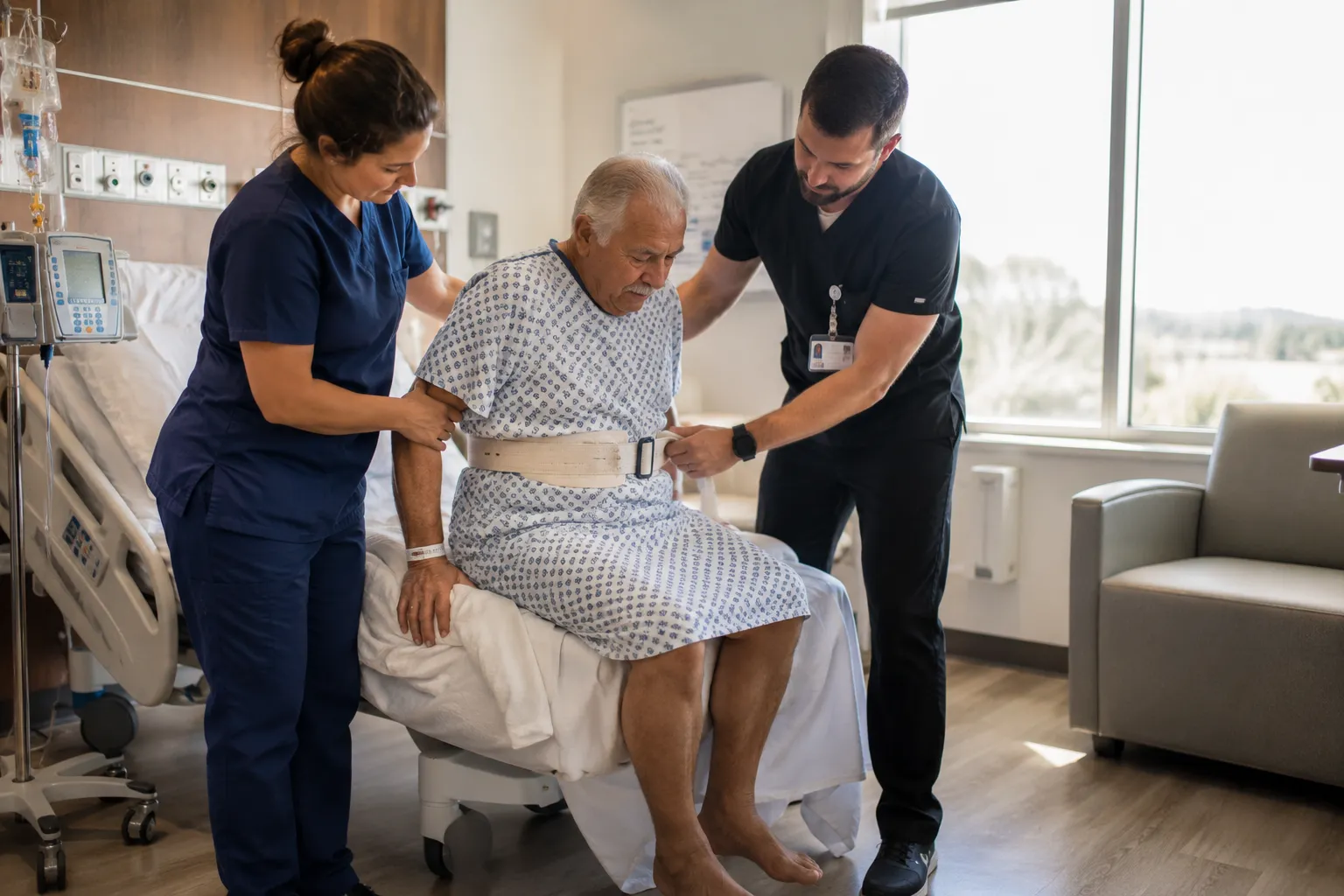
Physical therapy should start as early as your surgical team considers safe, often on the day of surgery or the morning after. Waiting tends to make recovery harder, not easier.
A UK study of more than 135,000 people aged 60 and older who had hip fracture surgery found that those who were up and moving by the day after surgery were twice as likely to be home within 30 days. The study was observational, so it shows a strong link rather than proof of cause. Still, hospitals increasingly treat early movement as standard care.
The first sessions are modest. Expect a therapist to help you sit at the edge of the bed, stand with support, and take a few steps with a walker.
Timing matters after discharge too. Medicare and Medicaid guidelines call for home therapy to begin within 48 hours of leaving the hospital. A 2026 study of nearly 19,000 adults 65 and older found that almost one in six faced delays. Rural patients also had 20 percent lower odds of strong mobility gains. Before you leave the hospital, confirm the therapy plan and the exact start date.
What Does Physical Therapy Include for Older Adults?
A typical plan covers five areas, and each one connects to a daily task you want back.
- Strength training: rebuilds the muscles around a new joint or healing incision so standing from a chair feels ordinary again.
- Range of motion work: eases stiffness so you can bend a knee for stairs or reach a high shelf.
- Balance and gait training: retrains your walking pattern and lowers fall risk.
- Transfer practice: covers getting in and out of bed, the car, the shower, and onto the toilet safely.
- Pain and swelling control: uses gentle manual therapy and movement to reduce discomfort without relying only on medication.
Therapists also teach home exercises and recommend changes around the house, such as grab bars, a shower chair, or a raised toilet seat.
How Does Physical Therapy Help Seniors Regain Independence?
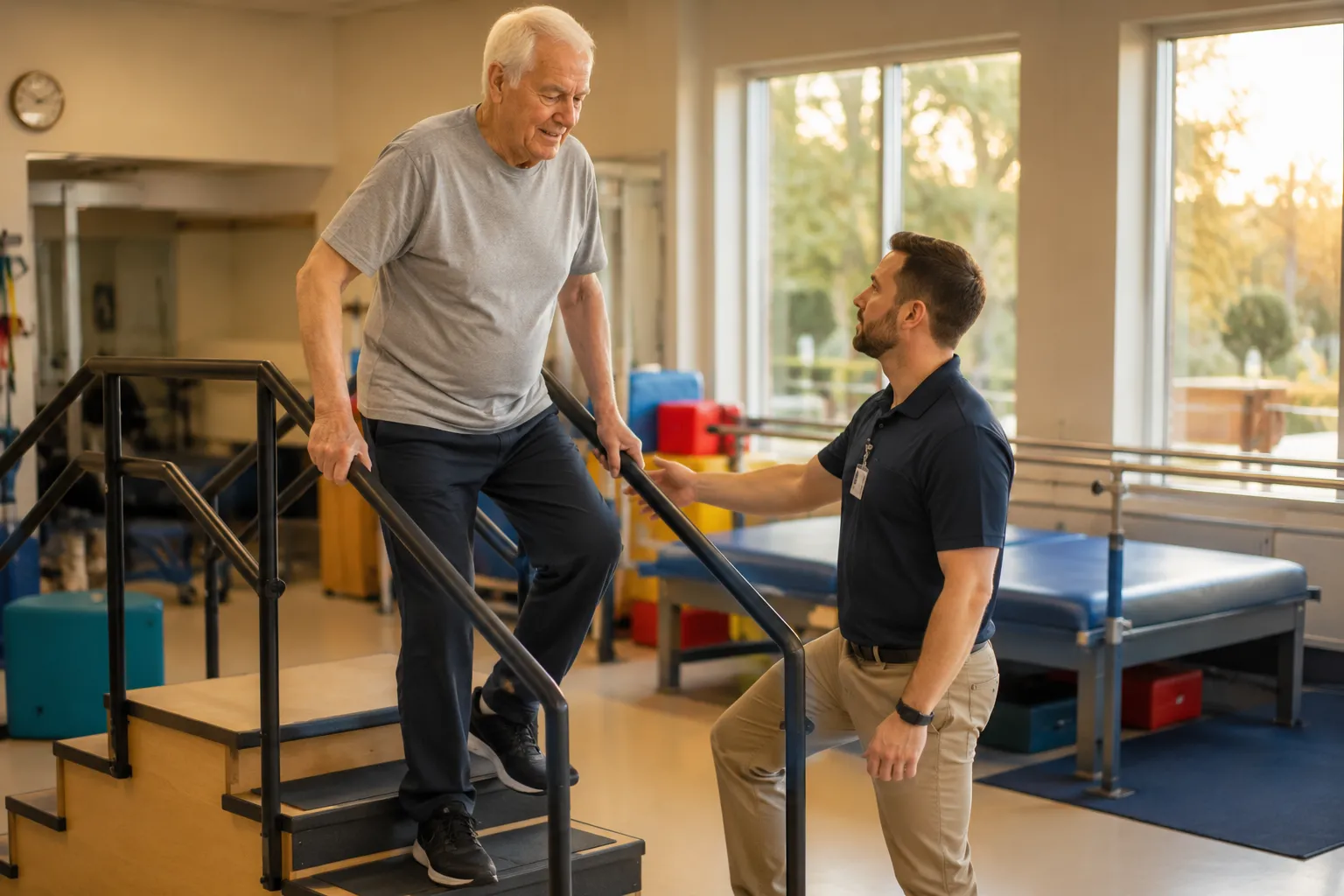
It turns recovery into specific goals tied to ordinary life. Independence is rarely one big milestone. It is made of small abilities that add up.
For example, picture a 78-year-old woman after a knee replacement. Her goal is not a number on a measuring tool. Her goal is to climb the four steps to her front door and make her own breakfast. Her therapist builds each session around those tasks, tracks progress weekly, and adds challenge as she improves.
The Mind and Body Connection
Confidence is part of the process. Fear of falling after surgery makes people move less, which makes them weaker, which deepens the fear. Therapy breaks that loop by letting you succeed in small, supervised steps. Stronger legs build a steadier mindset, and a steadier mindset keeps you moving.
Falls are a real stake here. CDC data shows that more than 90 percent of hip fractures in adults 65 and older are caused by falls. The U.S. Preventive Services Task Force also found that exercise or physical therapy offers a moderate benefit in preventing falls.
If your loved one also lives with dementia, therapy takes extra patience and a care team that understands memory loss. Families in that situation can look at memory care facilities that pair therapy with daily support.
How Long Does Recovery Take?
Most recoveries take weeks to months. The timeline depends on the surgery, your starting fitness, and how consistently you do the work. Ask your surgeon for a personal estimate.
As a rough guide from one rehabilitation program, knee replacement patients often attend outpatient therapy two or three times a week for six to eight weeks. After a hip replacement, home therapy for two or three weeks may be followed by outpatient sessions for three to four more weeks.
Here is the honest downside. Therapy can hurt, progress can stall, and some weeks feel like a step backward. Skipping sessions because of pain, tiredness, or transportation is a common reason recovery slips. Speak up early so the therapist can adjust the plan instead of watching you drift away from it.
Where Should Seniors Get Physical Therapy After Surgery?
The right setting depends on how much help you need and how safe your home is. If you are unsure which level of care fits, the care types explained guide breaks down the differences.
| Setting | Best for | Medicare coverage | Trade-off |
|---|---|---|---|
| Home health | Seniors with family nearby who struggle to travel | Covered when you are homebound and need skilled care | Needs a safe home and a reliable helper |
| Outpatient clinic | Seniors ready for more active work who can travel | Part B pays 80 percent after the $283 deductible in 2026, with no set session limit when medically necessary | Transportation and energy can be hurdles |
| Skilled nursing facility | Seniors needing daily therapy plus nursing care | Part A may cover short stays after a qualifying three-day hospital stay | Copayments start after day 20 |
How Can Families Support the Recovery?

Families help most by preparing the home, showing up, and resisting the urge to do everything for their loved one. A few habits make a real difference:
- Attend the first therapy session and ask for a written home exercise sheet.
- Set up the home before discharge with clear walkways, night lights, and a sturdy chair.
- Encourage effort over speed, and let your parent struggle a little, safely.
- Call the surgical team about fever, spreading redness at the incision, or new calf pain or swelling. Call emergency services for sudden trouble breathing.
Frequently Asked Questions
How soon should seniors start physical therapy after surgery?
Most seniors start within 24 hours of surgery, and sometimes on the same day. Your surgeon sets the timing based on the procedure, pain, and overall health.
Does Medicare cover physical therapy after surgery?
Yes, when the care is medically necessary. Part B covers outpatient therapy, Part A can cover a qualifying skilled nursing facility stay, and home health therapy is covered for people who are homebound and need skilled care.
Is it normal for physical therapy to hurt after surgery?
Some soreness is normal as muscles and joints wake up. Sharp or worsening pain is not, so tell your therapist right away so they can adjust the exercises.
What if my parent refuses to do therapy?
Ask what worries them most, whether pain, fear of falling, or tiredness. Then share it with the therapist, who can change the pace, the setting, or the schedule.
The Bottom Line
Physical therapy is the bridge between a successful operation and a return to normal life. Start early, stay consistent, speak up about pain, and choose a setting that matches the level of help needed. Progress is usually gradual, but it adds up to real independence.
Ready to compare rehab options? Browse verified skilled nursing listings on Geezer Guide or explore more guidance in our senior care resources.