
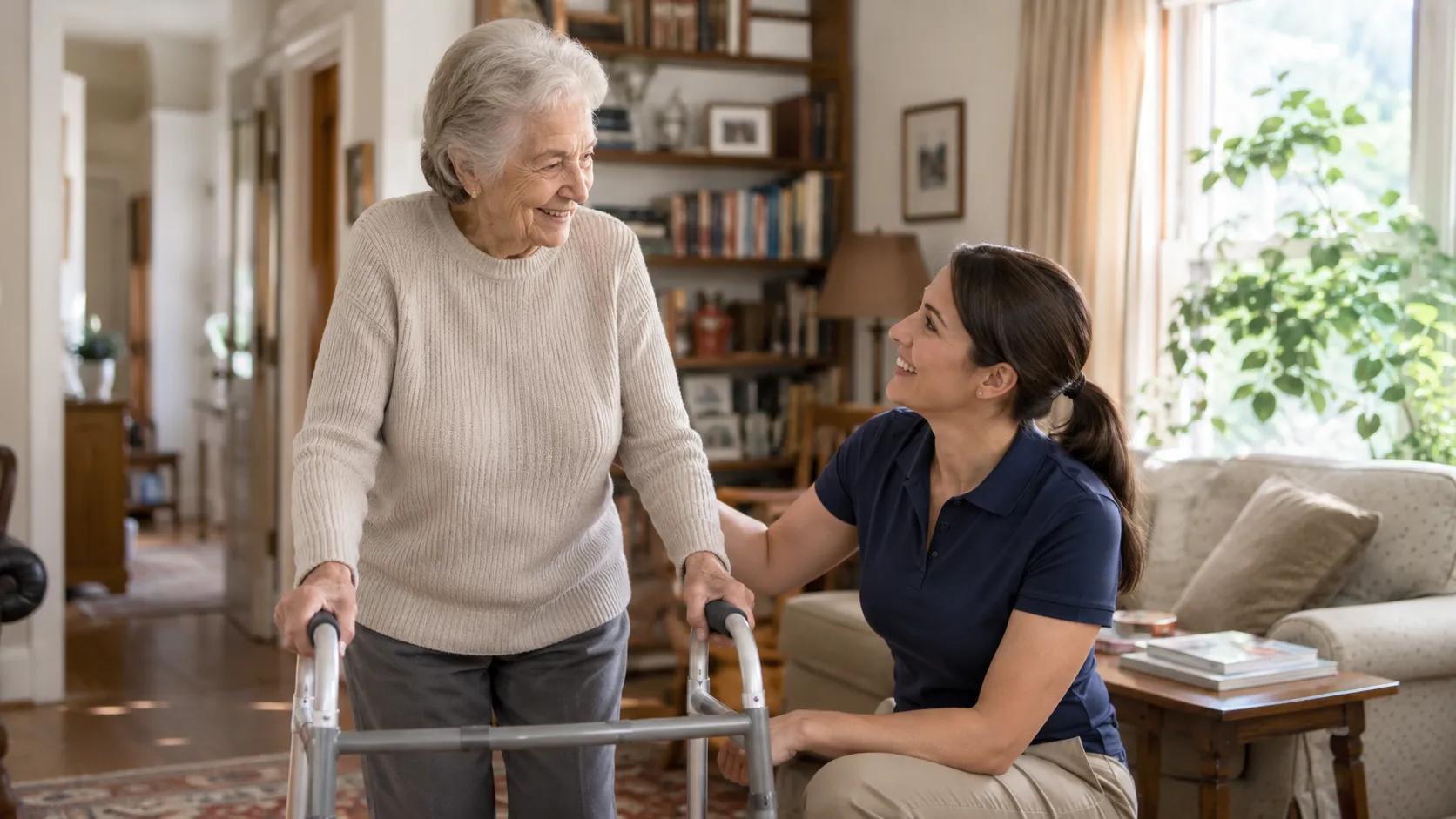
Quick Answer: Physiotherapy after hospitalization helps seniors rebuild the strength, balance, and stamina they lose during a hospital stay. Starting early, ideally in the hospital and continuing at a skilled nursing facility, at home, or in a clinic, lowers the risk of falls and lost independence. Medicare may cover this therapy, but only when specific rules are met.
A senior goes into the hospital walking to the bathroom on their own. A week later, after pneumonia or a hip repair, they leave needing help to stand up. This pattern is common, and physiotherapy after hospitalization is one of the best ways to reverse it.
This guide explains what a hospital stay does to an older body, what physiotherapy involves (called physical therapy in the United States), where seniors can get it, and how Medicare handles the cost. It is written for seniors and for adult children helping a parent come home.
What Does a Hospital Stay Do to a Senior's Body?
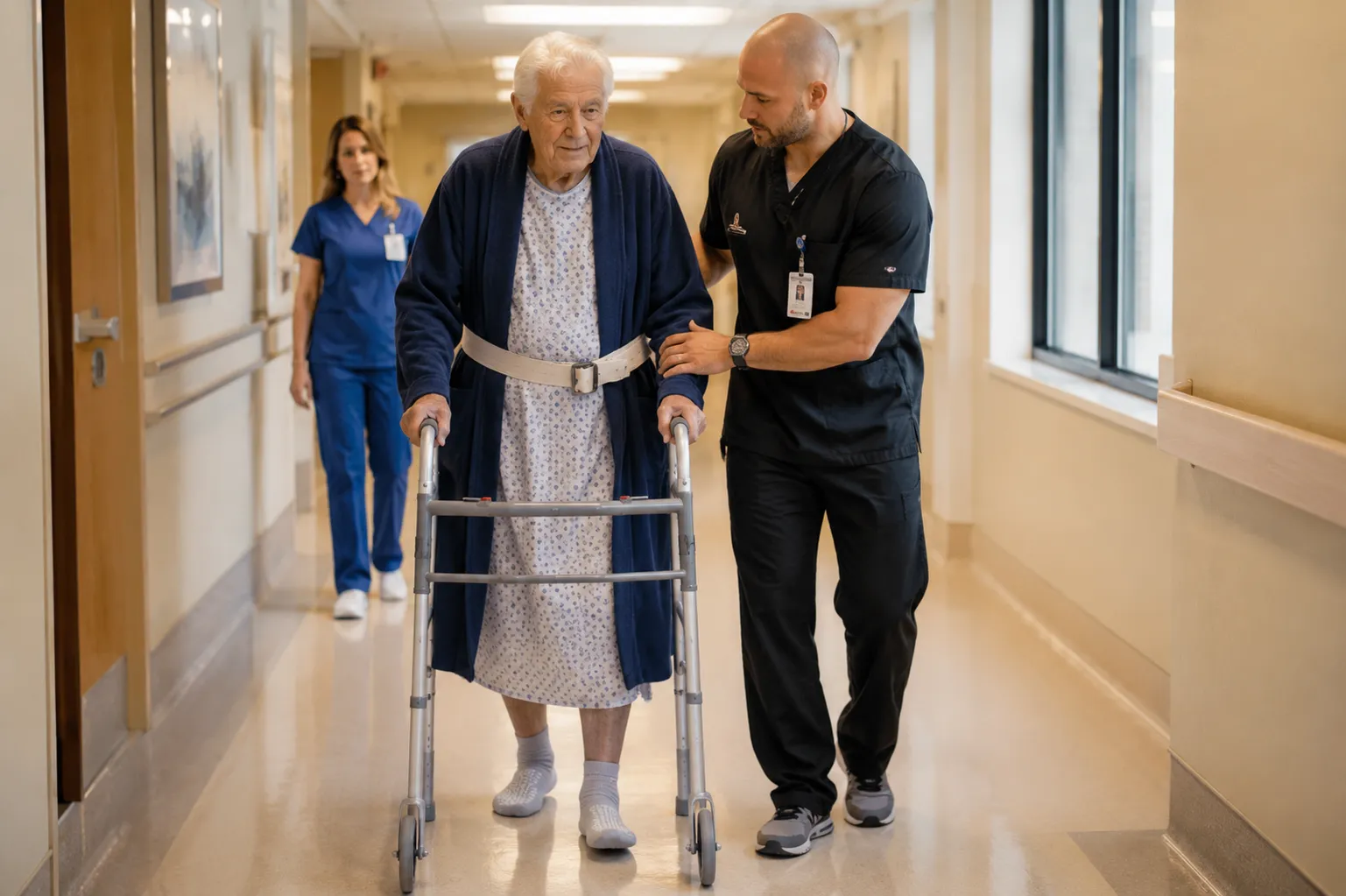
Even a short hospital stay can cost an older adult real strength, balance, and independence. Researchers call this hospital-associated deconditioning, and it affects thinking as well as movement.
One research team found that older adults spend about 83% of a hospital stay in bed and about 12% in a chair. Muscle responds quickly to that. In a study of healthy older adults, 10 days of bed rest cut knee strength by about 13% and stair-climbing power by about 14%.
The downstream numbers matter. Among hospitalized older adults, an estimated 30% to 50% become unable to complete at least one daily activity, such as bathing or dressing, after discharge. Older adults with low walking activity are about six times more likely to be readmitted than those who stay more active.
The mental side counts too. A 2024 review in Age and Ageing describes deconditioning as a whole-body syndrome that affects cognitive as well as physical function. At Geezer Guide, we treat mind and body recovery as one project.
What Does Physiotherapy After Hospitalization Involve?
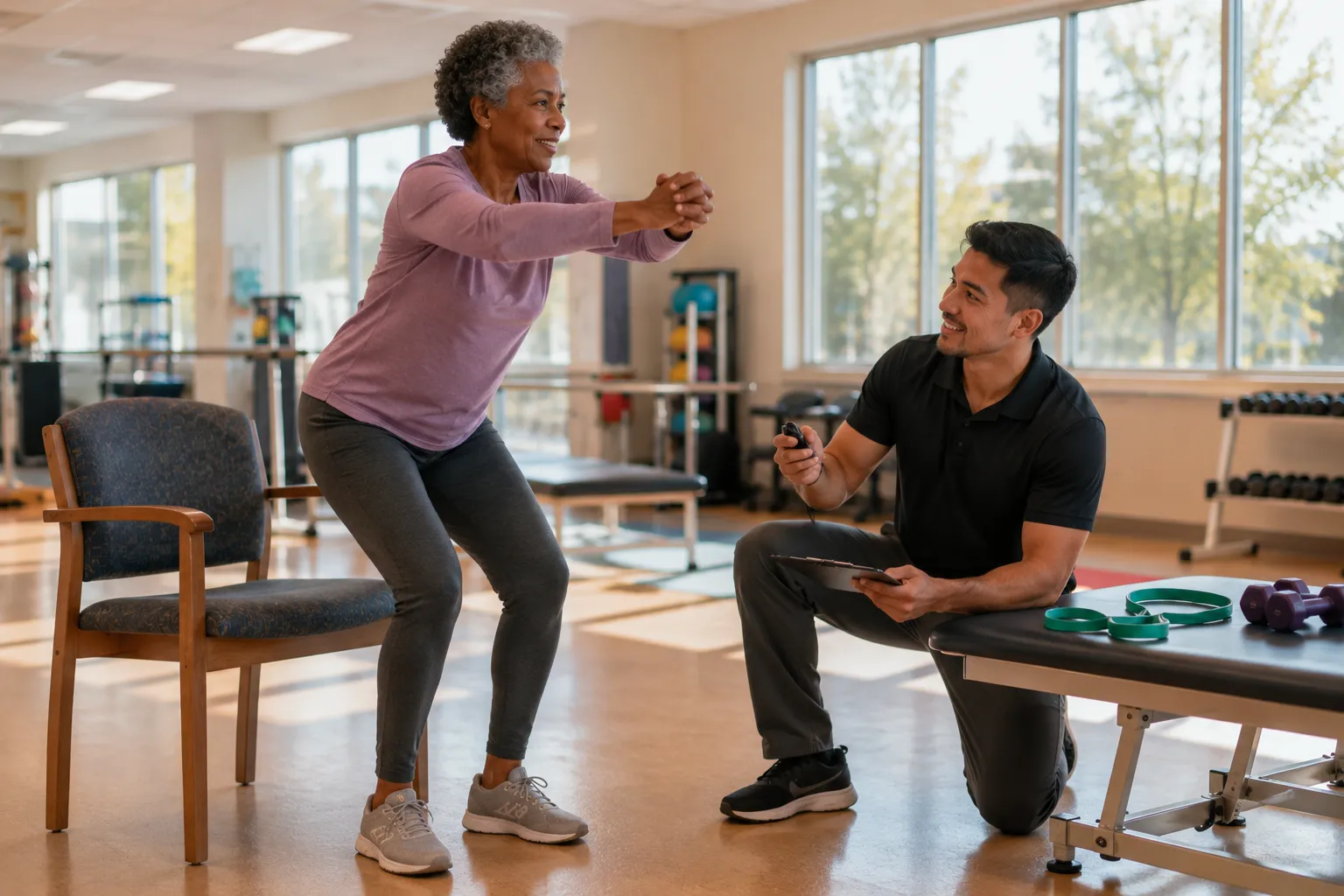
A physiotherapist measures how a senior moves, then builds a plan to restore what was lost. Sessions usually combine strength work, balance training, walking practice, and rehearsal of daily tasks.
The First Assessment
The therapist watches how the person stands from a chair, walks, climbs steps, and balances. Timed tests set a baseline so progress can be measured. The therapist also reviews pain, fatigue, fall risk, and the layout of the home.
Progressive Strengthening
Gentle range-of-motion work helps early on, but muscle rebuilds only when it is asked to do a little more each week. Therapists raise resistance, repetitions, or walking distance in small steps.
Balance, Walking, and Daily Tasks
Therapy often includes safe transfers from bed to chair, stair practice, and walking with a cane or walker. Occupational therapists may add help with dressing, bathing, and kitchen tasks.
For example, picture a 78-year-old woman who spends seven days in the hospital with pneumonia. She comes home afraid of falling, so she stays in her recliner, and her legs grow weaker. A therapist who visits twice a week gets her walking to the mailbox, then around the block. Confidence returns along with strength.
Where Can Seniors Get Physiotherapy After Leaving the Hospital?
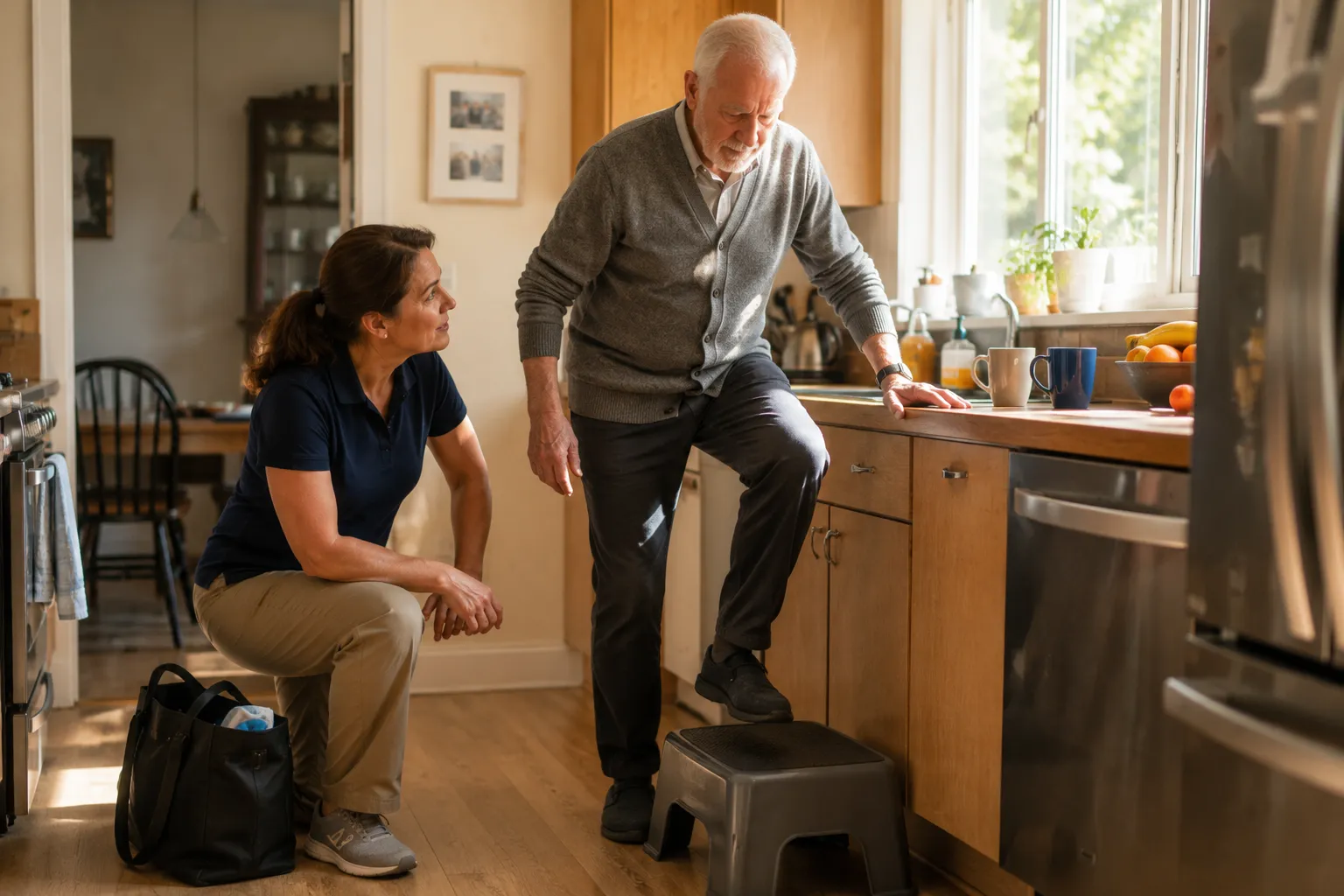
Seniors usually get post-hospital physiotherapy in one of four places: the hospital itself, a skilled nursing facility, at home through home health, or at an outpatient clinic. The right choice depends on how much help the person needs and how safely they can manage at home.
| Setting | Best For | Therapy Pace | Medicare Notes |
|---|---|---|---|
| Hospital inpatient | Early movement during the stay | Short sessions, limited by length of stay | Part of the inpatient stay |
| Skilled nursing facility | Seniors needing daily therapy plus nursing care | Most frequent, often several days a week | Needs a 3-day inpatient stay; up to 100 days per benefit period |
| Home health | Seniors who are homebound but medically stable | Part-time visits at home | Doctor must certify; agency must be Medicare-certified |
| Outpatient clinic | Seniors who can travel safely | Scheduled clinic visits | Usually covered under Part B with cost sharing |
Home health works differently. Medicare covers part-time physical therapy at home when a doctor certifies you need it, the agency is Medicare-certified, and you are homebound. Homebound does not mean bedridden. You can still leave for medical appointments and religious services. Medicare's home health services page explains the rules.
When Should Physiotherapy Start, and How Long Does Recovery Take?
Physiotherapy should start as early as the care team allows, ideally during the hospital stay. A clinical review of hospital-associated disability concluded that mobilization early in the admission is the best way to treat and prevent it.
Recovery takes longer than the loss. One hospital fact sheet estimates that a week in bed can take about three weeks to recover from. That is a rule of thumb, not a promise. Many seniors see steady gains over several weeks to a few months, and some need longer. Ask the therapist for specific goals and a date to reassess.
Does More Intense Physiotherapy Always Work Better?
No. More therapy is not automatically better. A 2024 randomized trial in Physical Therapy & Rehabilitation Journal enrolled 200 medically complex adults aged 65 and older receiving home health care after a hospital stay. Half got a high-intensity program, and half got enhanced usual care. After 60 days, the intensive group showed no greater improvement in function.
For families, the takeaway is that consistency, safety, and a plan matched to the person matter more than sheer intensity. The downside is that research does not yet tell us which senior benefits from which approach. Severe frailty, advanced dementia, or ongoing illness can also slow progress. That is a reason to set realistic goals, not a reason to skip therapy.
How Do Memory and Thinking Fit Into Physical Recovery?
Thinking skills and movement recover together. Confusion, poor sleep, and lost routines can slow physical progress. Seniors with memory loss need extra structure: familiar faces, a steady schedule, and short, repeated instructions.
If a parent's memory problems make recovery at home unsafe, it may be worth comparing memory care facilities that offer therapy support. Staying physically active also lifts mood and engagement, which is the mind and body connection at work.
How Can Families Support Recovery at Home?
Families help most by handling logistics early and keeping the routine going. Try these steps:
- Ask the discharge planner for a therapy referral before leaving the hospital.
- Request a home safety check covering loose rugs, lighting, grab bars, and a shower seat.
- Include protein at every meal, and ask the care team about targets.
- Track falls, new confusion, or rising pain, and report them promptly.
If home recovery is not working even with visits, ask whether assisted living facilities in your area work with outside therapy providers. For more guides, visit our senior care resources.
Frequently Asked Questions
How soon after hospital discharge should physiotherapy start?
As soon as the doctor clears it, and ideally before leaving the hospital. Ask the discharge planner to arrange the referral and the first evaluation.
Does Medicare pay for physiotherapy after a hospital stay?
Often, with conditions. Part A covers skilled nursing facility therapy after a three-day inpatient stay, and home health therapy covers homebound patients who meet the rules. Medicare Advantage plans may follow different rules, so call the plan before discharge.
Is physiotherapy safe for a frail senior?
Therapists adjust exercises for heart conditions, osteoporosis, pain, and fatigue, and they start at the person's current level. Report dizziness or shortness of breath right away.
Can a senior recover fully after a hospital stay?
Many seniors regain most of what they lost, especially with early and consistent therapy. Some do not return to their old baseline, particularly after serious illness or with advanced frailty. The goal is the safest, most independent level possible.
Getting Stronger, One Step at a Time
Hospital stays save lives, but they also take strength. Physiotherapy after hospitalization gives seniors a structured way to get it back. Three points matter most: start early, match the setting to the person's needs, and check Medicare rules before discharge day, not after.
Ready to compare skilled nursing options? Browse verified listings on Geezer Guide. This article offers general information and does not replace advice from a doctor or physical therapist.