

Quick Answer: Aging in place usually works best when a parent is mostly independent and needs a few hours of paid help each week. Assisted living becomes the better choice when daily hands-on help, overnight supervision, or isolation turns the house into a risk instead of a refuge. Cost, safety, and how much family caregiving is realistically available decide most of these cases.
Most people do not want to move. Roughly three out of four adults over 50 say they want to stay in their current home as they age, and that preference does not fade when their health does. So the aging in place vs assisted living decision rarely starts as a neutral comparison. It starts with a parent saying "I am fine here" and an adult child who is no longer sure that is true.
Both answers can be right. The correct one depends on how much hands-on help your parent needs each week, what the house can safely support, and who is actually available to provide care day after day.
What Is the Difference Between Aging in Place and Assisted Living?
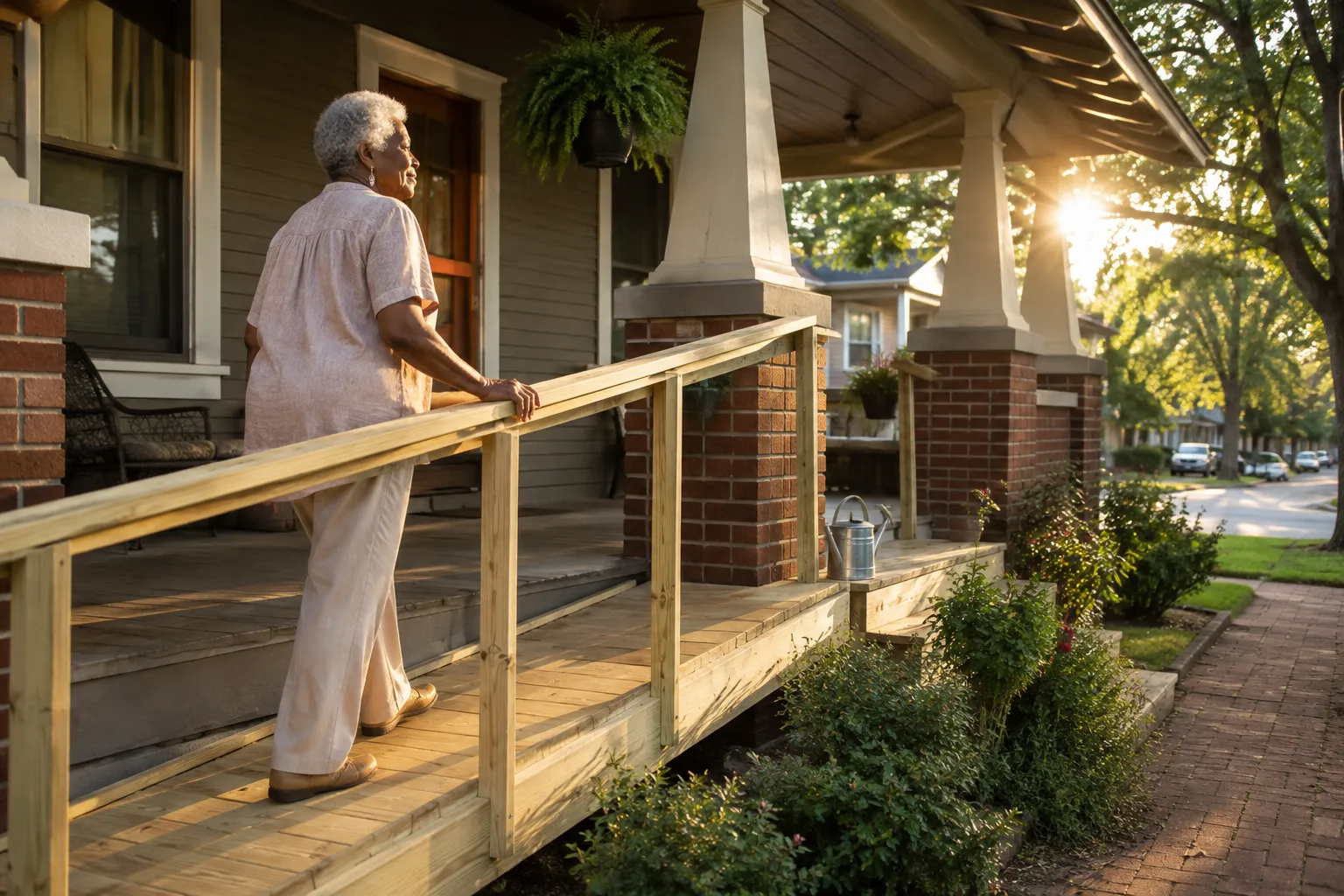
Aging in place means staying in your own home and community while bringing in support as you need it. Assisted living means moving into a licensed residential community where housing, meals, and personal care are bundled into one monthly fee with staff on site around the clock.
The real difference is who carries the load. At home you assemble care yourself: an aide, a meal service, a housekeeper, a neighbor who checks in, and a family member holding it together. In assisted living, coordination is somebody else's job.
If the category names still blur together, our guide to care types explained breaks down every level of senior care.
What Are the Signs Your Parent Should Not Stay Home Anymore?
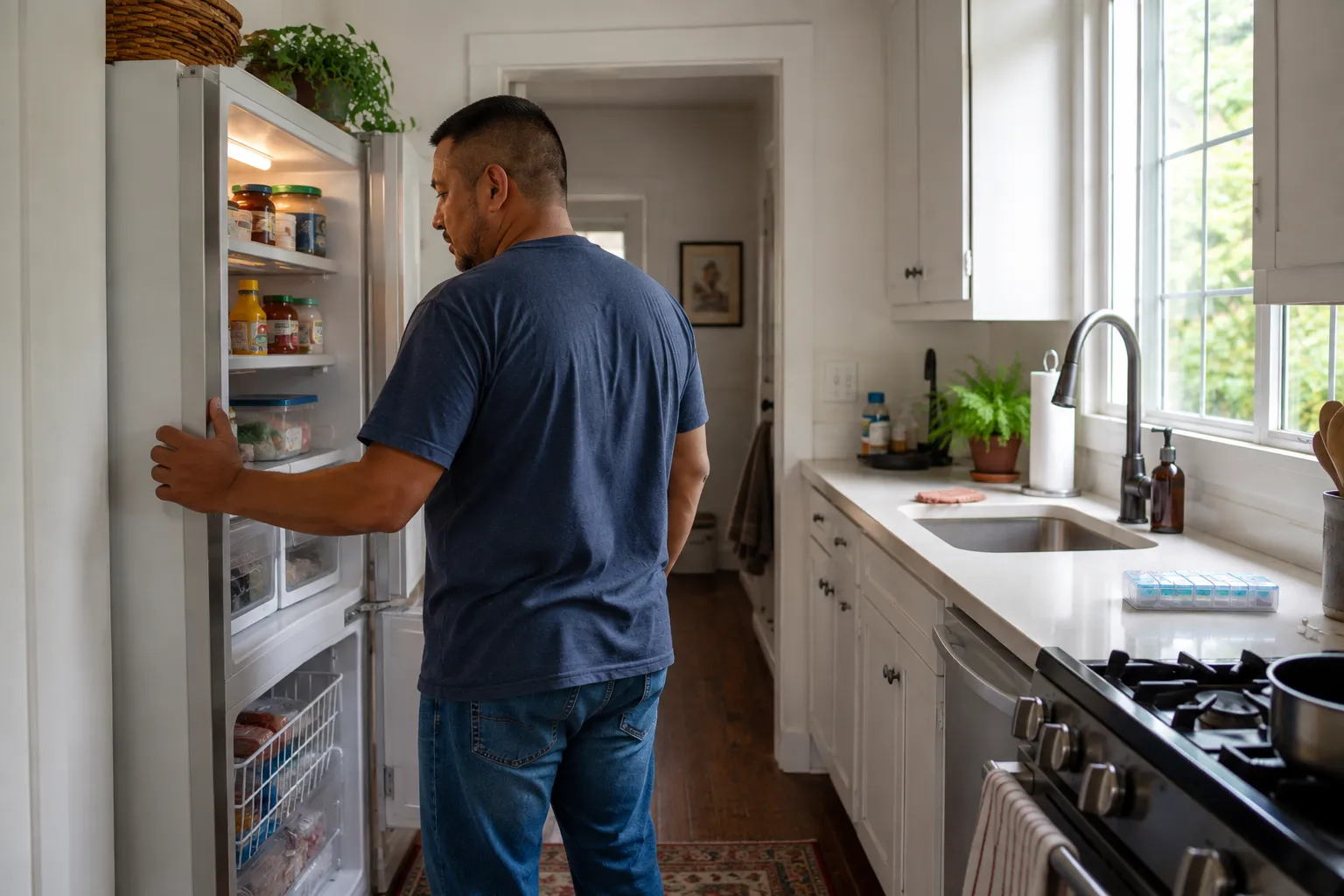
Falls, medication mistakes, weight loss, household breakdown, and caregiver burnout are the five signals that most often mean home has stopped working. You do not need all five. Two or three that keep repeating are enough.
Watch for:
- Falls and near falls.Bruises your parent cannot explain, furniture-walking down the hallway, a new fear of the stairs. The CDC reports that about one in four adults 65 and older falls each year, and falls are the leading cause of injury death in that group.
- Medication errors.Expired bottles, missed doses, duplicate prescriptions from two different doctors.
- Nutrition slipping.Spoiled food in the refrigerator, clothes hanging loose, meals skipped because cooking is exhausting.
- Household breakdown.Stacks of unopened mail, late payment notices, a yard nobody has touched, repairs left undone.
- Social withdrawal.Church, card games, the barbershop, and the phone all go quiet.
- Caregiver burnout.You are exhausted, short-tempered, behind on your own doctor appointments, and your stomach drops when the phone rings at night.
Burnout is not a character flaw. It is data.
Here is the honest limitation: moving does not fix everything. A move often triggers a few weeks of confusion or resistance, especially for a parent with early cognitive changes. Plan for a six to eight week adjustment period.
Which Option Is Better for Your Parent's Mind and Body?

It depends on whether the home still supports movement and connection, or quietly shuts both down. Physical decline and cognitive decline feed each other, and isolation accelerates both. The National Institute on Aging treats social engagement as a core part of healthy aging, not a nice extra.
Home wins on familiarity, routine, and autonomy. A parent who still walks to the mailbox, cooks a little, and has neighbors stopping by is doing real mind and body work daily.
Assisted living wins when the house has become a waiting room. Built-in meals, daily conversation, group exercise, and staff who notice a change in gait or appetite create structure that a quiet house cannot.
Ask one question: in the past month, how many days did your parent leave the house and speak with someone other than family? If the answer is two or three, the house is no longer supporting them.
What If Your Parent Has Dementia?
Standard assisted living is not built for wandering, exit-seeking, or sundowning. Once those behaviors appear, memory care is the appropriate setting, not a general assisted living apartment and not a home with a part-time aide.
In Texas, this also shows up in licensing. Type A facilities serve residents who can evacuate on their own, while Type B facilities serve residents who need help evacuating or overnight attendance. Reviewing Type A vs Type B assisted living before you tour will keep you from ruling out the right community for the wrong reason.
Frequently Asked Questions
Is aging in place cheaper than assisted living?
Usually yes, but only up to a point. Below roughly 40 hours of paid care per month, home is clearly cheaper. Above 40 hours per week, assisted living generally costs less.
Does Medicare pay for assisted living or in-home care?
No. Medicare does not cover room and board in assisted living, and it does not cover custodial care such as bathing, dressing, or meal preparation at home. It covers short-term skilled nursing and limited home health after a qualifying hospital stay.
At what age do most people move into assisted living?
The average move-in age is around 84, and roughly 40 percent of assisted living residents have some form of dementia. Most moves follow a specific event such as a fall, a hospital stay, or the loss of a spouse.
Can my parent keep their house and still try assisted living?
Yes. Many communities offer short-term or respite stays, and families often leave the house empty during a trial period. A 30-day trial is a reasonable way to test the fit before selling anything.
The Bottom Line
Aging in place and assisted living are not opposites. They are two stages of the same plan. The honest question is not which is better but which fits your parent's needs this year. Track the hours of help they need, the safety of the house, and the sustainability of whoever is providing care. When two of those three start failing, it is time to look.
Do not wait for the fall that makes the decision for you.Compare assisted living facilities near you on Geezer Guide, or start with our senior care resources if you are still figuring out what your parent needs.