

Texas is home to more than 3.5 million residents over age 65, and that number keeps climbing every year. With that kind of growth comes choice: thousands of licensed senior care facilities are spread across the state, from small residential homes to large campuses with full medical staff on site. That much choice can feel like its own problem when you are trying to find the right fit for yourself or a parent.
This guide walks through the main types of senior care facilities in Texas, how the state licenses them, what they typically cost, and the questions worth asking before you sign anything.
What Types of Senior Care Facilities Are Available in Texas?

Texas licenses four main categories of long-term care: assisted living, memory care, boarding homes, and skilled nursing. Each one serves a different level of need, and many seniors move between them as their health changes over time.
Assisted living facilities help residents with daily tasks like bathing, dressing, and medication reminders while letting them keep their own apartment or room. Memory care is a specialized setting for people with Alzheimer's or other forms of dementia, with secured units and staff trained specifically in dementia care. Boarding homes, sometimes called residential care homes, are smaller and more home-like, often housing four to sixteen residents. Skilled nursing facilities, commonly called nursing homes, provide round the clock medical care for residents who need more than personal assistance.
What Is the Difference Between Type A and Type B Assisted Living in Texas?
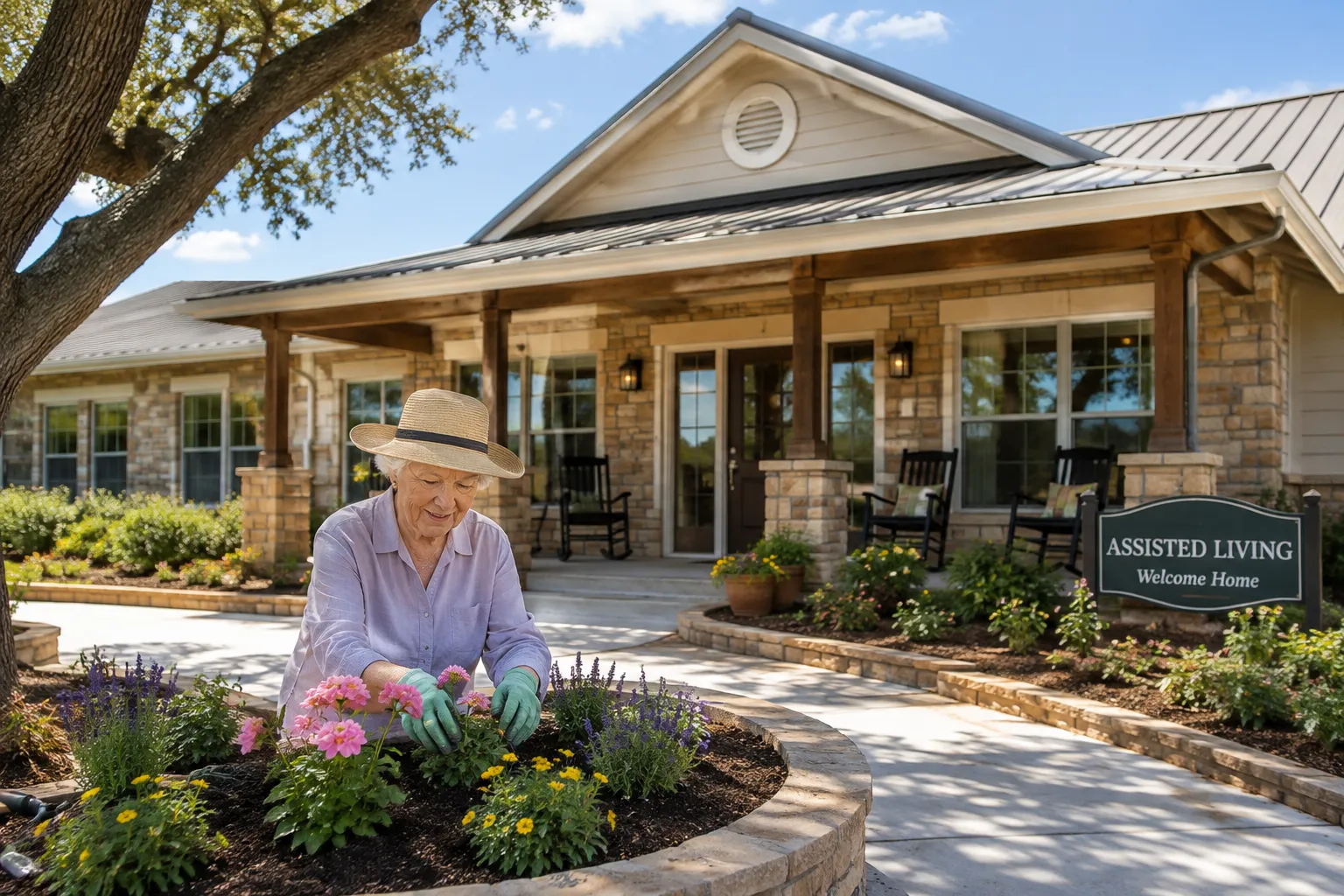
Texas splits assisted living into two license types, and the difference matters more than most families realize. The Texas Health and Human Services Commission, known as HHSC, assigns a facility's license type based on how capable residents are of evacuating in an emergency, not simply how much personal care they receive day to day.
Type A facilities serve residents who can evacuate on their own, do not need routine attendance during nighttime hours, and can follow directions during an emergency. Type B facilities serve residents who may need staff assistance to evacuate, may require overnight supervision, and may not be able to follow emergency instructions independently. Any facility that markets itself as memory care must hold a Type B license with a separate Alzheimer's certification.
This distinction affects staffing levels, building requirements, and how much decline a resident can experience before being asked to move. For a full breakdown, see our guide to Type A vs Type B assisted living.
How Much Does Senior Care Cost in Texas?

Cost is usually the first question families ask, and the honest answer is that it depends heavily on location and level of care. Assisted living costs vary depending on the community, services, and level of support provided. Memory care typically costs more than standard assisted living because of the extra staffing and security involved. Skilled nursing is generally the most expensive option because it provides a higher level of medical care and around-the-clock support.
Medicare does not cover the cost of assisted living or long-term custodial care, a fact that surprises many families. Medicaid can help cover skilled nursing costs for residents who qualify financially, and Texas offers waiver programs that can offset part of the cost of assisted living for those who meet income and care-level requirements. Other common funding sources include long-term care insurance, VA Aid and Attendance benefits for qualifying veterans, and proceeds from selling a home.
The downside of these programs is that eligibility rules are complex, and waiting lists exist for some Medicaid waiver slots. It is worth talking to a benefits counselor or elder law attorney early, rather than after a crisis forces a decision.
What Are the Signs Your Parent Needs Senior Care?
Families often wait until a crisis, a fall, a missed medication, a kitchen accident, before starting the search. Watching for earlier signs can make the transition calmer and give you more options to choose from.
- Unpaid bills or unopened mail piling up
- Weight loss or spoiled food in the refrigerator
- Missed medication doses or confusion about prescriptions
- Bruises from falls that were never mentioned
- A noticeable drop in hygiene or grooming habits
- Withdrawal from friends, hobbies, or regular routines
- Difficulty keeping up with the house or yard
For example, if your mother has started missing her blood pressure medication twice a week and you also notice unopened bills from the past two months, that combination is often a stronger signal than any single issue on its own. One missed pill might be nothing. A pattern is worth a conversation.
Texas families dealing specifically with memory loss can browse memory care facilities to see what specialized options look like before symptoms become a safety issue.
What Questions Should You Ask When Touring a Facility?
A tour tells you more in thirty minutes than a website ever will. Bring a list and do not be shy about asking direct questions.
- What are staff-to-resident ratios during the day and overnight?
- How is medication tracked and administered?
- What triggers a rate increase or a change in care level?
- Is the facility licensed as Type A or Type B, and does that fit your loved one's needs?
- What were the results of the most recent state inspection?
- What happens during a medical emergency?
- What is the move-out policy if care needs exceed what the facility can provide?
The honest limitation here is that a great tour does not guarantee a great experience six months later. Staff turnover, ownership changes, and shifting resident needs can all change the picture. Plan to visit more than once, at different times of day, and talk to residents or family members if you can.
Frequently Asked Questions
How do I find licensed senior care facilities in Texas?
Start with the Texas Health and Human Services Commission, which licenses and inspects every assisted living, memory care, and skilled nursing facility in the state. From there, search verified listings on Geezer Guide to compare options in your area.
What is the difference between assisted living and a nursing home in Texas?
Assisted living helps residents with daily tasks like bathing and medication reminders while they keep their independence. Nursing homes, also called skilled nursing facilities, provide continuous medical care for residents with more serious health needs.
Does Medicaid pay for assisted living in Texas?
Medicaid does not typically cover the base cost of assisted living, but Texas offers waiver programs that can help offset personal care costs for those who financially qualify. Skilled nursing care is more commonly covered by Medicaid for eligible residents.
How much notice do I need before moving a parent into a facility?
Most Texas facilities ask for a deposit and a signed residency agreement before move-in, and availability can range from a few days to several weeks depending on the community. Starting the search early gives you more choices and less pressure.
Final Thoughts
Finding the right senior care facility in Texas comes down to matching the level of care to the person, and being honest about budget and timeline. Assisted living, memory care, boarding homes, and skilled nursing each solve a different problem, and the state's Type A and Type B licensing system exists to make sure residents land somewhere that can actually keep them safe.
Take your time, tour more than one place, and ask the hard questions before you sign. Ready to compare verified facilities near you? Browse senior care options on Geezer Guide.